2025
Social media for mental unwind, and rewind

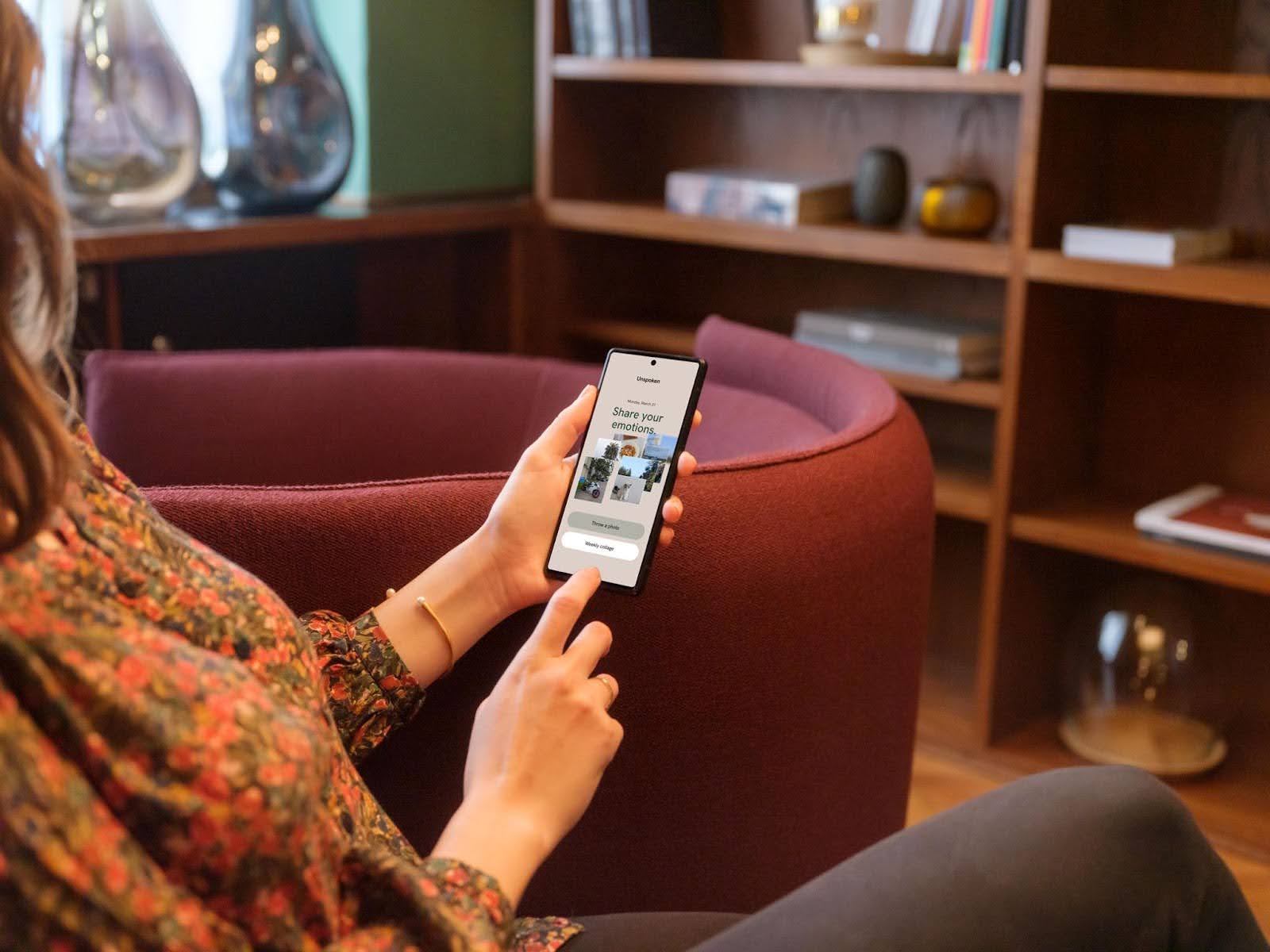
Social media for mental unwind, and rewind
One value that has characterized so many things I’ve done in college so far is helping others, helping people in accessing what they need. I enjoy visualizing how technology can connect people in non-verbal ways. This inspired me to create Unspoken, a concept social media that allows users to reflect on the feelings they have. In today's world, memorable experiences constitute our true personal luxury. These unique moments are what enrich our lives and leave a lasting impact. Here's to those extraordinary experiences that become the stories we cherish and share.
Year
2025
Role
Product Designer
Deliverables
UI design Branding User study Full-stack implementation
Design Story
It started off as a project where I merely wanted to track how much trash I produce in a week, and to take pictures of moments where people are throwing things away. But then as I encountered more scenes throughout the city, whether it was a man yelling about far-right politics or a group of students singing to their guitar melodies, I realized that the act of throwing can be very abstract. It does not have to be physical, nor does it have to be negative. So I had the impression that it would be very meaningful to create a space where people can feel comfortable dumping out their feelings, memories and anything they can think of.
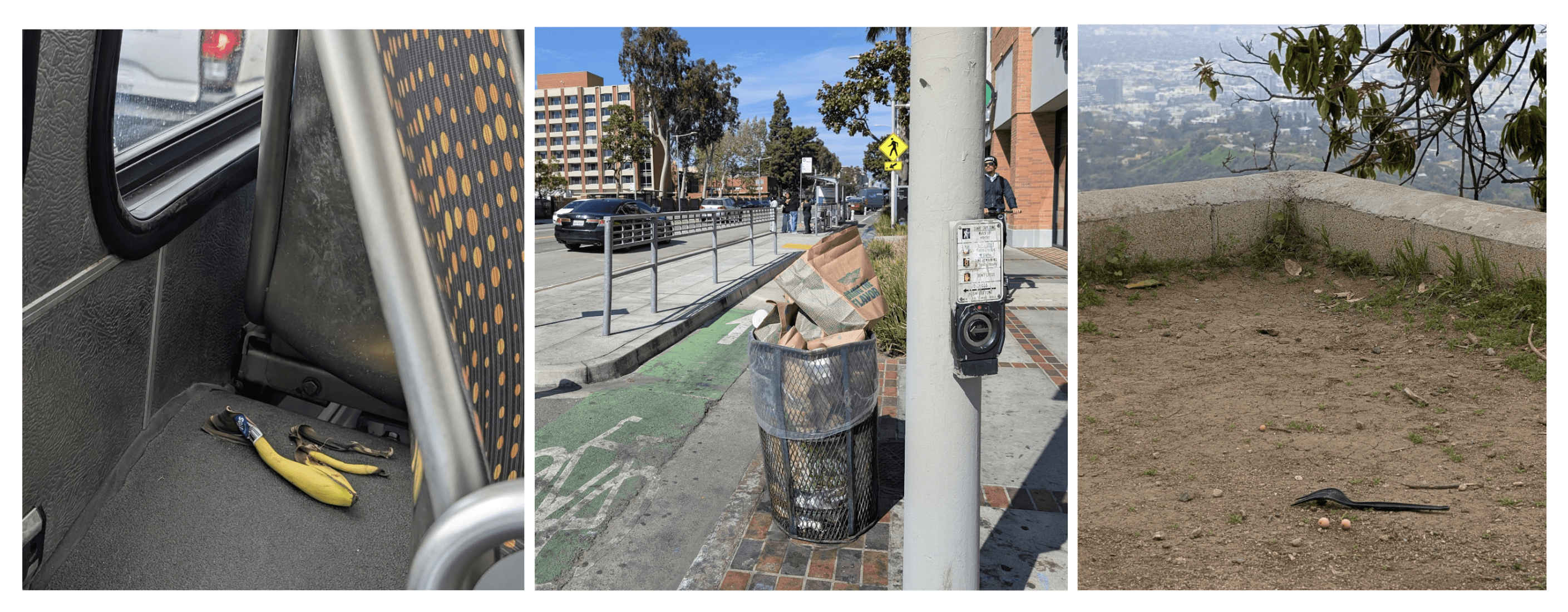
At that time I was more concerned about physical objects. But what if none of these are the main form of things people throw away?
Many aspects of our world surround the very basics of expressions and communication, yet these are very difficult to be good at. Of all the thoughts we tend to internalize from day to day, I often find myself being nervous about describing my deepest feelings to others. Taking inspiration from what we have practiced in class so far, I wanted to utilize images to help strengthen the resonance of the stories we tell.
The ambiguity of this idea I was exploring actually increased as I began working on it. At one point I was very certain about making a continuous storyboard where each person tries to write stories that make sense of the absurd, out-of-context images the person before uploaded. But I struggled, then, with relating this plan back to my intention to (help people). I knew I wanted to explore more on the nuance of expressions. Many existing social media mechanisms—blogs, discussions, stories, short videos, and many more—offer a sense of reward and closure to its users strictly in terms of the feedback from others. Often one would expect others to recognize or sympathize with their contents. But what if I could strip away all these complications and focus on celebrating the act of sharing?
This is, in fact, something that many of us are unconsciously doing. I spoke to my friends who have been running their personal “photo dump” Instagram accounts, where they would upload candid photos of their daily life as they explore college. Each of them resonated with the idea that it feels empowering to share their lives as is, without any added filters or fuss. It very much reminds me of the core values of BeReal when it first came out, and I was likewise inspired by that. The point about these accounts is not to see other people’s reactions, but rather to keep an intimate memory lane that allows the mind to internalize certain feelings throughout a day. After looking at physical storyboards, headsets, broadcasts, and (in the near future) holograms, I eventually decided on making an interactive app because it seems to still be the quickest, easiest way to invite users to contribute in image formats.
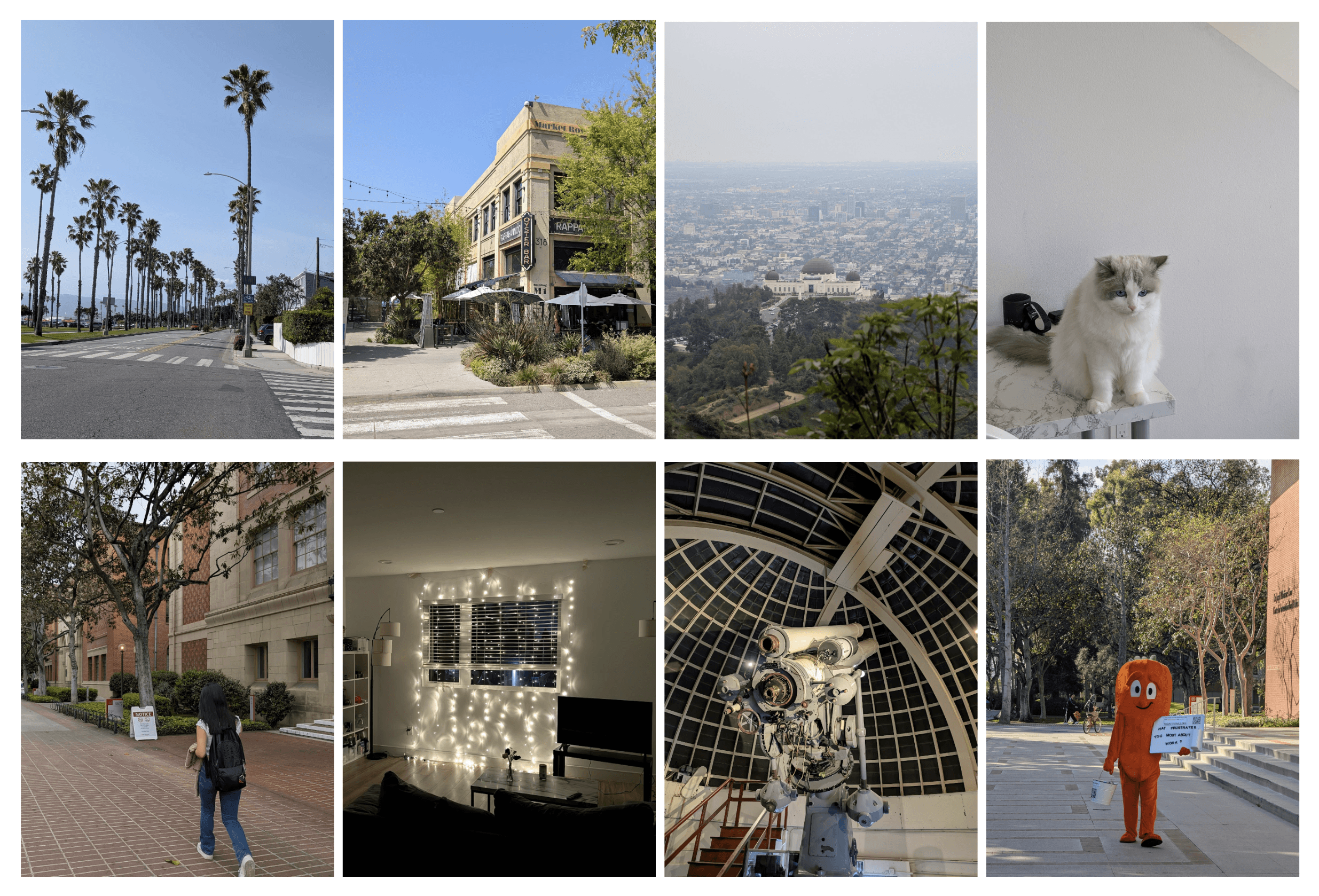
This is what a photo dump for my spring break might look like. I think images are a powerful medium. Every photo has its own mood, and collectively it creates a theme that is vivid even without any text descriptions.
With this tool in mind, I wanted to also work on creating a sense of community that is positive, encouraging, and diverse. At this point I was still in my creative exploration phase, and the comments I’ve received from my friends and peers have been positive about the idea to “throw” images. But so far everything still revolves around the personal sphere. To take it one step further in allowing people to not just express but also relate to emotions requires reframing the concept. Part of this is to bridge various stories together in non-destructive ways. The “comment section” idea implemented across so many forms of media has gotten us into the habit of saying “I like this story, but here’s my take.”, and much of the original storytelling is diluted by adjacent opinions. I want authors and responders to feel that they are being treated equally in my app, which ended up becoming the greatest challenge in my design process because there are simply so many different forms of stories to take into consideration. I settled on what I believe was the most logical implementation at the moment, which involves making two tracks: one that allows the user to assume the persona of an author, and the other that takes the user on a journey of observation and reflection. In the author track, one would be uploading to the server an image that they would like to get rid of, and write a short story about it. In the responder track, one would take several images others have uploaded and make them into a personal collage.
Throughout my ideation process I kept modifying my “wall” of ideas. Eventually I stripped away many of them and concentrated on these few core qualities and images that I believe resonate with my vision most strongly.
Here’s a more detailed list that outlines how the app works:
This is a completely no-text, no-verbal feedback site. Sense of closure is provided through the action of making collages. I wanted to deviate from the existing notion of social media by not offering any direct means of communication between people, and keeping users away from biased judgements. The focus is about evoking and expressing feelings.
Every other day (or at a frequency one feels comfortable with) the user uploads a photo they “want to throw” to the app, and writes a short story about it.
By the end of the week, one will be able to pick from a wide array of photos others uploaded and turn them into a collage that reflects their feelings from the past week.
After sending their collages in, they can then look at what the original authors of each picture said about the pictures, and compare/relate to them.
Users who upload images will be able to see how many people included those pictures in their own collages.
At the end of each year, we ask our users to rewind by stepping through all the 52 collages they’ve made. Each collage will conjure a special memory and allow the user to reflect on their personal growths.
The best way to interact with this app may be to sit on a comfy sofa, wind down a bit, and let the images take you on a journey of self reflection and understanding.
I expected the project to be challenging and rewarding. In terms of ideation and creativity it indeed presented many new considerations for me to digest, but due to time and the sheer scale of the application I had to simplify the actual execution. I was still very glad to learn many frontend technical skills (React, HTML/CSS, animation libraries) that I have always wanted to grasp. To maximize my chances of learning new things along the way, I deliberately wanted to avoid getting into my comfort “flow state” by not focusing too much on design (UIUX), but ended up actually finding another flow state by writing some code. It was a very rewarding experience.
I very much recognize that there are many aspects of this app that could be better thought out, which is why I am excited to keep this project with me long-term. I expect to find other ways of executing the ideas outlined in the project as I progress through my academic journey. But nonetheless I believe the creative work I’ve done so far has inspired me to look at how people most comfortably share their opinions, which is invaluable to my work as a product engineer and designer.
Design Story
It started off as a project where I merely wanted to track how much trash I produce in a week, and to take pictures of moments where people are throwing things away. But then as I encountered more scenes throughout the city, whether it was a man yelling about far-right politics or a group of students singing to their guitar melodies, I realized that the act of throwing can be very abstract. It does not have to be physical, nor does it have to be negative. So I had the impression that it would be very meaningful to create a space where people can feel comfortable dumping out their feelings, memories and anything they can think of.
At that time I was more concerned about physical objects. But what if none of these are the main form of things people throw away?
Many aspects of our world surround the very basics of expressions and communication, yet these are very difficult to be good at. Of all the thoughts we tend to internalize from day to day, I often find myself being nervous about describing my deepest feelings to others. Taking inspiration from what we have practiced in class so far, I wanted to utilize images to help strengthen the resonance of the stories we tell.
The ambiguity of this idea I was exploring actually increased as I began working on it. At one point I was very certain about making a continuous storyboard where each person tries to write stories that make sense of the absurd, out-of-context images the person before uploaded. But I struggled, then, with relating this plan back to my intention to (help people). I knew I wanted to explore more on the nuance of expressions. Many existing social media mechanisms—blogs, discussions, stories, short videos, and many more—offer a sense of reward and closure to its users strictly in terms of the feedback from others. Often one would expect others to recognize or sympathize with their contents. But what if I could strip away all these complications and focus on celebrating the act of sharing?
This is, in fact, something that many of us are unconsciously doing. I spoke to my friends who have been running their personal “photo dump” Instagram accounts, where they would upload candid photos of their daily life as they explore college. Each of them resonated with the idea that it feels empowering to share their lives as is, without any added filters or fuss. It very much reminds me of the core values of BeReal when it first came out, and I was likewise inspired by that. The point about these accounts is not to see other people’s reactions, but rather to keep an intimate memory lane that allows the mind to internalize certain feelings throughout a day. After looking at physical storyboards, headsets, broadcasts, and (in the near future) holograms, I eventually decided on making an interactive app because it seems to still be the quickest, easiest way to invite users to contribute in image formats.
This is what a photo dump for my spring break might look like. I think images are a powerful medium. Every photo has its own mood, and collectively it creates a theme that is vivid even without any text descriptions.
With this tool in mind, I wanted to also work on creating a sense of community that is positive, encouraging, and diverse. At this point I was still in my creative exploration phase, and the comments I’ve received from my friends and peers have been positive about the idea to “throw” images. But so far everything still revolves around the personal sphere. To take it one step further in allowing people to not just express but also relate to emotions requires reframing the concept. Part of this is to bridge various stories together in non-destructive ways. The “comment section” idea implemented across so many forms of media has gotten us into the habit of saying “I like this story, but here’s my take.”, and much of the original storytelling is diluted by adjacent opinions. I want authors and responders to feel that they are being treated equally in my app, which ended up becoming the greatest challenge in my design process because there are simply so many different forms of stories to take into consideration. I settled on what I believe was the most logical implementation at the moment, which involves making two tracks: one that allows the user to assume the persona of an author, and the other that takes the user on a journey of observation and reflection. In the author track, one would be uploading to the server an image that they would like to get rid of, and write a short story about it. In the responder track, one would take several images others have uploaded and make them into a personal collage.
Throughout my ideation process I kept modifying my “wall” of ideas. Eventually I stripped away many of them and concentrated on these few core qualities and images that I believe resonate with my vision most strongly.
Here’s a more detailed list that outlines how the app works:
This is a completely no-text, no-verbal feedback site. Sense of closure is provided through the action of making collages. I wanted to deviate from the existing notion of social media by not offering any direct means of communication between people, and keeping users away from biased judgements. The focus is about evoking and expressing feelings.
Every other day (or at a frequency one feels comfortable with) the user uploads a photo they “want to throw” to the app, and writes a short story about it.
By the end of the week, one will be able to pick from a wide array of photos others uploaded and turn them into a collage that reflects their feelings from the past week.
After sending their collages in, they can then look at what the original authors of each picture said about the pictures, and compare/relate to them.
Users who upload images will be able to see how many people included those pictures in their own collages.
At the end of each year, we ask our users to rewind by stepping through all the 52 collages they’ve made. Each collage will conjure a special memory and allow the user to reflect on their personal growths.
The best way to interact with this app may be to sit on a comfy sofa, wind down a bit, and let the images take you on a journey of self reflection and understanding.
I expected the project to be challenging and rewarding. In terms of ideation and creativity it indeed presented many new considerations for me to digest, but due to time and the sheer scale of the application I had to simplify the actual execution. I was still very glad to learn many frontend technical skills (React, HTML/CSS, animation libraries) that I have always wanted to grasp. To maximize my chances of learning new things along the way, I deliberately wanted to avoid getting into my comfort “flow state” by not focusing too much on design (UIUX), but ended up actually finding another flow state by writing some code. It was a very rewarding experience.
I very much recognize that there are many aspects of this app that could be better thought out, which is why I am excited to keep this project with me long-term. I expect to find other ways of executing the ideas outlined in the project as I progress through my academic journey. But nonetheless I believe the creative work I’ve done so far has inspired me to look at how people most comfortably share their opinions, which is invaluable to my work as a product engineer and designer.
Design Story
It started off as a project where I merely wanted to track how much trash I produce in a week, and to take pictures of moments where people are throwing things away. But then as I encountered more scenes throughout the city, whether it was a man yelling about far-right politics or a group of students singing to their guitar melodies, I realized that the act of throwing can be very abstract. It does not have to be physical, nor does it have to be negative. So I had the impression that it would be very meaningful to create a space where people can feel comfortable dumping out their feelings, memories and anything they can think of.
At that time I was more concerned about physical objects. But what if none of these are the main form of things people throw away?
Many aspects of our world surround the very basics of expressions and communication, yet these are very difficult to be good at. Of all the thoughts we tend to internalize from day to day, I often find myself being nervous about describing my deepest feelings to others. Taking inspiration from what we have practiced in class so far, I wanted to utilize images to help strengthen the resonance of the stories we tell.
The ambiguity of this idea I was exploring actually increased as I began working on it. At one point I was very certain about making a continuous storyboard where each person tries to write stories that make sense of the absurd, out-of-context images the person before uploaded. But I struggled, then, with relating this plan back to my intention to (help people). I knew I wanted to explore more on the nuance of expressions. Many existing social media mechanisms—blogs, discussions, stories, short videos, and many more—offer a sense of reward and closure to its users strictly in terms of the feedback from others. Often one would expect others to recognize or sympathize with their contents. But what if I could strip away all these complications and focus on celebrating the act of sharing?
This is, in fact, something that many of us are unconsciously doing. I spoke to my friends who have been running their personal “photo dump” Instagram accounts, where they would upload candid photos of their daily life as they explore college. Each of them resonated with the idea that it feels empowering to share their lives as is, without any added filters or fuss. It very much reminds me of the core values of BeReal when it first came out, and I was likewise inspired by that. The point about these accounts is not to see other people’s reactions, but rather to keep an intimate memory lane that allows the mind to internalize certain feelings throughout a day. After looking at physical storyboards, headsets, broadcasts, and (in the near future) holograms, I eventually decided on making an interactive app because it seems to still be the quickest, easiest way to invite users to contribute in image formats.
This is what a photo dump for my spring break might look like. I think images are a powerful medium. Every photo has its own mood, and collectively it creates a theme that is vivid even without any text descriptions.
With this tool in mind, I wanted to also work on creating a sense of community that is positive, encouraging, and diverse. At this point I was still in my creative exploration phase, and the comments I’ve received from my friends and peers have been positive about the idea to “throw” images. But so far everything still revolves around the personal sphere. To take it one step further in allowing people to not just express but also relate to emotions requires reframing the concept. Part of this is to bridge various stories together in non-destructive ways. The “comment section” idea implemented across so many forms of media has gotten us into the habit of saying “I like this story, but here’s my take.”, and much of the original storytelling is diluted by adjacent opinions. I want authors and responders to feel that they are being treated equally in my app, which ended up becoming the greatest challenge in my design process because there are simply so many different forms of stories to take into consideration. I settled on what I believe was the most logical implementation at the moment, which involves making two tracks: one that allows the user to assume the persona of an author, and the other that takes the user on a journey of observation and reflection. In the author track, one would be uploading to the server an image that they would like to get rid of, and write a short story about it. In the responder track, one would take several images others have uploaded and make them into a personal collage.
Throughout my ideation process I kept modifying my “wall” of ideas. Eventually I stripped away many of them and concentrated on these few core qualities and images that I believe resonate with my vision most strongly.
Here’s a more detailed list that outlines how the app works:
This is a completely no-text, no-verbal feedback site. Sense of closure is provided through the action of making collages. I wanted to deviate from the existing notion of social media by not offering any direct means of communication between people, and keeping users away from biased judgements. The focus is about evoking and expressing feelings.
Every other day (or at a frequency one feels comfortable with) the user uploads a photo they “want to throw” to the app, and writes a short story about it.
By the end of the week, one will be able to pick from a wide array of photos others uploaded and turn them into a collage that reflects their feelings from the past week.
After sending their collages in, they can then look at what the original authors of each picture said about the pictures, and compare/relate to them.
Users who upload images will be able to see how many people included those pictures in their own collages.
At the end of each year, we ask our users to rewind by stepping through all the 52 collages they’ve made. Each collage will conjure a special memory and allow the user to reflect on their personal growths.
The best way to interact with this app may be to sit on a comfy sofa, wind down a bit, and let the images take you on a journey of self reflection and understanding.
I expected the project to be challenging and rewarding. In terms of ideation and creativity it indeed presented many new considerations for me to digest, but due to time and the sheer scale of the application I had to simplify the actual execution. I was still very glad to learn many frontend technical skills (React, HTML/CSS, animation libraries) that I have always wanted to grasp. To maximize my chances of learning new things along the way, I deliberately wanted to avoid getting into my comfort “flow state” by not focusing too much on design (UIUX), but ended up actually finding another flow state by writing some code. It was a very rewarding experience.
I very much recognize that there are many aspects of this app that could be better thought out, which is why I am excited to keep this project with me long-term. I expect to find other ways of executing the ideas outlined in the project as I progress through my academic journey. But nonetheless I believe the creative work I’ve done so far has inspired me to look at how people most comfortably share their opinions, which is invaluable to my work as a product engineer and designer.